
- English
- Español
- Português
- русский
- Français
- 日本語
- Deutsch
- tiếng Việt
- Italiano
- Nederlands
- ภาษาไทย
- Polski
- 한국어
- Svenska
- magyar
- Malay
- বাংলা ভাষার
- Dansk
- Suomi
- हिन्दी
- Pilipino
- Türkçe
- Gaeilge
- العربية
- Indonesia
- Norsk
- تمل
- český
- ελληνικά
- український
- Javanese
- فارسی
- தமிழ்
- తెలుగు
- नेपाली
- Burmese
- български
- ລາວ
- Latine
- Қазақша
- Euskal
- Azərbaycan
- Slovenský jazyk
- Македонски
- Lietuvos
- Eesti Keel
- Română
- Slovenski
- मराठी
- Srpski језик

What Makes Fine Chemicals a Smart Sourcing Choice for High-Performance Industries?
Focus keyword: Fine Chemicals | Related terms: specialty chemicals, high-purity intermediates, custom synthesis, electronic-grade chemicals, batch traceability, COA, SDS, quality assurance
Abstract
Fine chemicals are the precision layer of the chemical supply chain: lower-volume products made with tighter controls on purity, impurities, consistency, and documentation than commodity materials. In this article, I explain what fine chemicals are (and what they are not), where they are used, and how to evaluate suppliers using evidence-based criteria aligned with Google’s EEAT expectations (Experience, Expertise, Authoritativeness, and Trustworthiness). You’ll get a practical sourcing checklist, a comparison table, and a step-by-step workflow you can use to reduce risk across sampling, specifications, quality control, packaging, and change management. I’ll also highlight the kind of buyer-ready practices you should expect from professional manufacturers such as Leache Chem LTD. and close with a simple next step to move from browsing to qualified sourcing.
Table of Contents
- What will this article cover
- What are fine chemicals
- How do fine chemicals differ from commodities and specialties
- Where are fine chemicals used
- What should buyers check before ordering
- Which specifications actually prevent problems
- Which option fits your use case
- How do I run a low-risk sourcing workflow
- How does this connect to EEAT
- FAQ
- Next step
What will this article cover?
- Define Fine Chemicals in plain language with buyer-friendly examples
- Explain where fine chemicals matter most and why consistency beats “headline purity”
- Share a supplier evaluation checklist that prioritizes proof over marketing
- Clarify high-impact specifications: assay, moisture, impurities, metals, particle size, stability
- Provide a quick comparison table you can use internally for procurement decisions
- Offer a repeatable sourcing workflow for sampling, qualification, and long-term supplier control
What are fine chemicals?
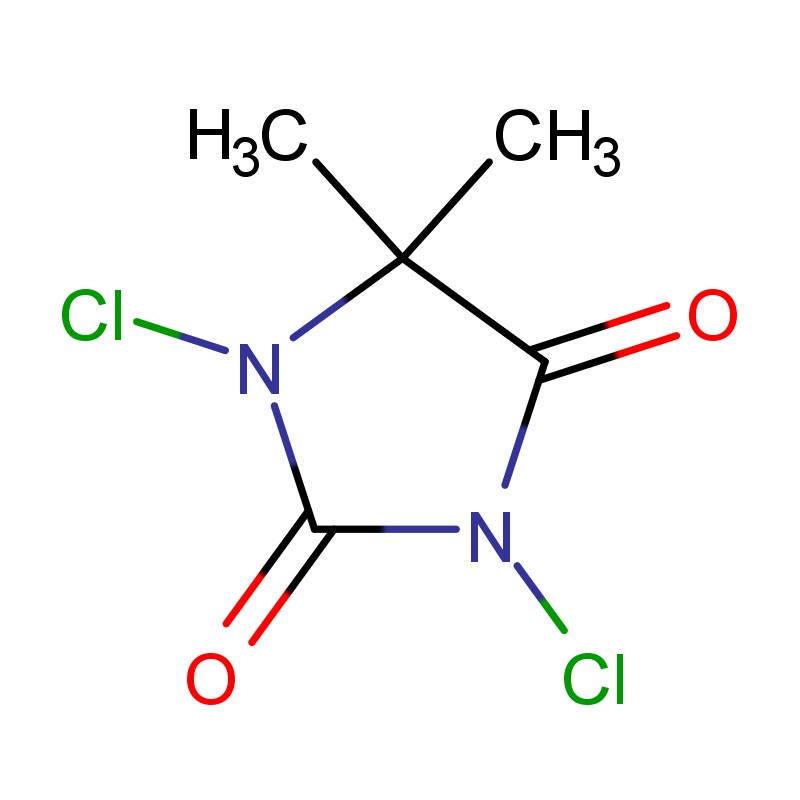
If you’ve ever had a production run go sideways because one batch of raw material behaved differently from the last, you already understand why fine chemicals exist. Fine chemicals are typically produced in lower to medium volumes, but with higher expectations for controlled composition, predictable behavior, and documented quality. They are often used as intermediates, functional ingredients, or performance-critical components in manufacturing lines where small variations can cause large downstream costs.
I’m careful with definitions because suppliers and buyers sometimes use “fine chemicals” to mean “anything not bulk.” In practice, fine chemicals are defined less by a marketing label and more by how the product is made and managed:
- Controlled purity and impurity windows (not just one purity number)
- Repeatable manufacturing with stable raw materials and process parameters
- Analytical verification with methods that match the product risk profile
- Batch-level documentation (COA, SDS, traceability, and sometimes change control)
- Packaging and logistics discipline to protect quality until it arrives at your site
In other words, fine chemicals are not only “a molecule.” They are a commitment that the molecule will behave consistently in your application. If your downstream process is sensitive, fine chemicals are usually a smarter sourcing choice than “generic equivalents,” even when the structures look identical on paper.
How do fine chemicals differ from commodities and specialty chemicals?
This is the part that helps procurement, QA, and production teams stop talking past each other. Commodity chemicals are usually optimized for volume and price. Specialty chemicals are often optimized for functional performance in a specific application. Fine chemicals are optimized for controlled composition, purity, and consistency, and they frequently support both performance and compliance needs.
Here’s how I describe the difference in a way that’s useful for decision-making:
- Commodity chemical: “I need a standard material at large volume; broad specs are acceptable.”
- Specialty chemical: “I need a material that creates a specific performance effect in a formulation or process.”
- Fine chemical: “I need predictable composition and controlled impurities because variability has a real cost.”
From an operational perspective, the biggest difference is that fine chemicals tend to require more than a one-line spec. You’re not just buying “X% assay.” You’re buying a controlled impurity profile, moisture range, physical characteristics, and the evidence to prove it for each batch.
Where are fine chemicals used?
Fine chemicals are usually invisible in the final product, but they’re extremely visible in the results: yield stability, color consistency, reaction behavior, shelf life, and fewer customer complaints. They matter most wherever your process is sensitive to trace variation, or where audits and customer approvals require clean documentation.
High-impact application scenarios
- Pharmaceutical and agrochemical intermediates: impurity types can change reaction pathways and downstream purification workload.
- Electronics and advanced materials: moisture and metals can cause defects, instability, or reduced performance.
- Personal care and formulated products: consistency affects appearance, odor, stability, and consumer perception.
- Industrial additives and functional compounds: batch variation can shift viscosity, reactivity, compatibility, or final performance.
- Custom synthesis projects: you may need tailored specs, packaging formats, or application-driven adjustments.
If any of the above sound familiar, it’s worth treating Fine Chemicals as a risk management tool, not a luxury item. The “true cost” includes line interruptions, rework, rejected batches, customer claims, and the time your team spends troubleshooting.
What should buyers check before ordering fine chemicals?
This section is based on practical procurement reality: buyers need evidence that a supplier can deliver consistent batches, answer technical questions, and support documentation requests without slowing the project down. I don’t treat “we have strict QC” as a proof statement. I treat it as a claim that needs verification.
Supplier evaluation checklist
- Analytical capability: Are they able to test what matters (assay, moisture, impurities, metals, physical properties) using appropriate methods?
- COA discipline: Is the COA consistent in format and parameters across lots, and does it match your spec language?
- Traceability: Can each shipment be linked to batch records and retention samples when needed?
- Change management: Will they notify you before meaningful changes (raw materials, process, equipment, packaging, site)?
- Packaging control: Do they specify inner liners, drum/bag types, seals, desiccants, and labeling clearly?
- Response quality: Do they answer with specifics, or do you get vague replies that create future disputes?
- Sample integrity: Can they provide representative production samples rather than “special lab batches” that never repeat?
This is where experienced manufacturers like Leache Chem LTD. can be evaluated in a buyer-friendly way: not through slogans, but through documentation readiness, clarity on specifications, and consistent lot-level support.
Which specifications actually prevent problems?
In fine chemicals sourcing, the most expensive mistakes come from incomplete specs. Many disputes start with “the assay is fine” while the real issue is moisture, trace impurities, metal contamination, or a physical property that affects processing. If you want fewer surprises, define the parameters that predict success in your real application.
High-impact specification categories
- Assay: specify method and basis (as-is vs dry basis). Define acceptable range, not only a target.
- Moisture / Loss on drying: critical for stability, reactivity, and physical handling.
- Impurity profile: identify critical known impurities and define limits; total impurities alone may be misleading.
- Residual solvents: especially relevant when your process is sensitive or regulated.
- Metals / trace elements: important for electronics, catalysts, and many advanced materials.
- Particle size / bulk density: affects dissolution, blending uniformity, flow, and filling consistency.
- Appearance, color, odor: useful as quick incoming checks and consistency markers across lots.
- Stability & shelf life: include storage conditions and packaging requirements.
A simple buyer note
If a parameter can break your process, treat it as a pass/fail specification with a test method. “Typical value” language is fine for low-risk purchases, but it is not enough when fine chemicals are feeding a high-value production line.
Which option fits your use case?
When someone on the team asks “Do we really need fine chemicals for this?”, I use a simple comparison table. It’s not about labeling products. It’s about aligning the sourcing category to the business risk.
| Category | Typical Volume | Primary Value Driver | Quality Focus | Best Fit |
|---|---|---|---|---|
| Commodity Chemicals | Very high | Cost per ton | Broad specs, basic checks | Bulk processing with high tolerance to variation |
| Specialty Chemicals | Medium | Functional performance | Application testing + consistency | Formulations where performance effects are the priority |
| Fine Chemicals | Low to medium | Purity + predictability + documentation | Tight specs, impurity control, traceability | Intermediates, sensitive processes, high-value manufacturing lines |
How do I run a low-risk fine chemicals sourcing workflow?
A strong fine chemicals sourcing process is repeatable. It protects you during the first order, and it keeps protecting you after the relationship “feels stable.” If you want to reduce variability and disputes, the workflow below is a practical baseline.
Step 1: Define success in application terms
- What does the chemical need to do in your process (reaction behavior, stability, compatibility, performance effect)?
- Which failures are unacceptable (yield loss, discoloration, precipitation, odor changes, unstable viscosity, defects)?
- Which parameters predict those failures (moisture, specific impurities, metals, particle size, residual solvents)?
Step 2: Build a technical package that prevents misunderstandings
- A specification sheet with clear pass/fail limits and test methods
- Packaging requirements (inner liner material, drum/bag type, seal method, desiccant use if needed)
- Labeling requirements (product name, batch number, net weight, storage notes)
- Documentation set (COA, SDS, and any additional compliance needs relevant to your project)
Step 3: Sample realistically and test as you will produce
- Request a representative production sample, not a one-off “perfect lab batch.”
- Test under your real conditions (temperature, mixing speed, residence time, reaction scale assumptions).
- Ask for a COA from the sample lot and, if possible, one additional lot to gauge consistency.
Step 4: Validate reliability beyond the molecule
- Lead time stability and realistic capacity planning
- Logistics protection (packaging, moisture barriers, labeling clarity)
- Clear handling of deviations (what happens if a parameter is near-limit or out-of-spec?)
Step 5: Maintain a quality loop after approval
- Incoming inspection plan aligned to the highest-risk parameters
- Periodic lot trend review (assay, moisture, key impurities, physical properties)
- Change control agreement for critical products (especially when your downstream approval depends on consistency)
Once you run this workflow twice, sourcing fine chemicals becomes much calmer. Your team stops guessing, and you stop paying hidden costs created by variability.
How does this connect to EEAT and buyer trust?
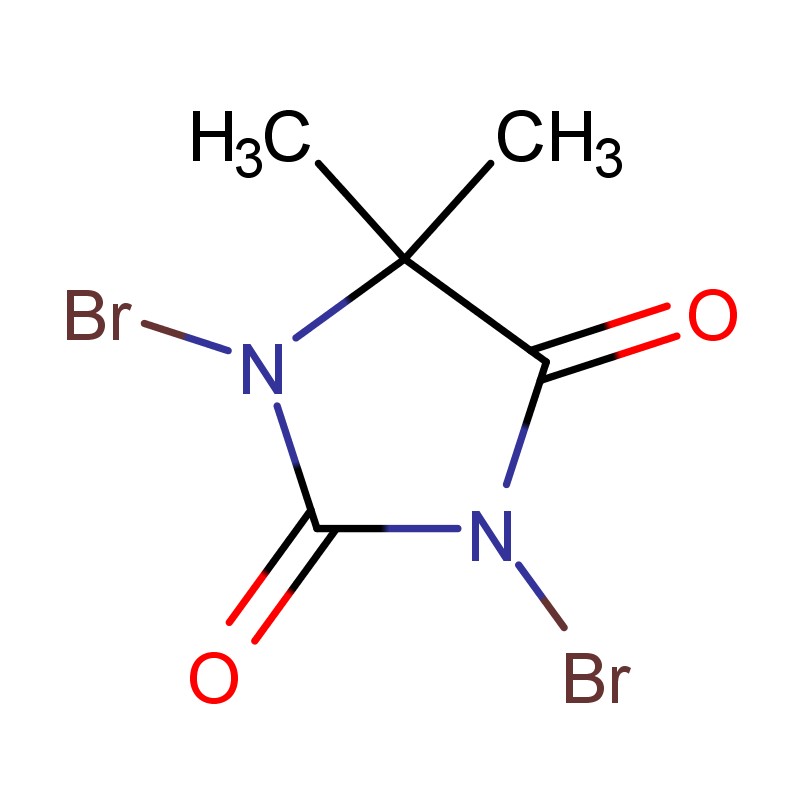
EEAT is often discussed as a “Google concept,” but it maps closely to how real buyers make decisions:
- Experience: practical steps that reflect real sourcing challenges (samples, batch variation, packaging, lead time).
- Expertise: correct use of technical parameters (impurity profiles, methods, stability, metals, moisture).
- Authoritativeness: structured guidance and consistent frameworks that readers can apply internally.
- Trustworthiness: emphasis on documentation, traceability, and change control rather than vague claims.
If your website content mirrors how buyers actually evaluate fine chemicals, it not only performs better in search, it also makes your inquiry leads more qualified. Readers who understand your quality approach tend to become the buyers you want.
FAQ
Are fine chemicals the same as specialty chemicals?
They overlap, but they are not identical. Specialty chemicals are often defined by functional performance in an application. Fine chemicals are defined by controlled composition, tight purity/impurity limits, and strong documentation expectations. A product can be both, but the sourcing priorities may differ.
Which documents should I request when buying fine chemicals?
At minimum, request a COA for each batch and an SDS. For sensitive or regulated applications, you may also need traceability details, test method references, packaging specifications, and a clear approach to change control for critical products.
Why can two products with the same assay perform differently?
Assay is only one number. Differences in moisture, trace impurities, residual solvents, metals, or physical properties (like particle size and bulk density) can change reactivity, stability, and processing behavior even when the headline purity looks identical.
How can I evaluate consistency if I only have one sample?
Ask for COAs from multiple lots, even if you test only one lot at the beginning. If key parameters remain tight across lots, that’s a strong indicator of stable process control. You can also run a second-lot verification during your first purchase cycle.
What are common red flags in fine chemicals sourcing?
- Vague answers about test methods or impurity control
- COA parameters that change frequently or fail to match the promised specification
- Unclear packaging details for moisture- or contamination-sensitive products
- Overconfident promises without technical backing (“we can do anything”)
- No visible approach to change control for critical products
Next step
Fine chemicals sourcing is easiest when you treat it as a system: define what matters, lock the right specs, validate with realistic tests, and work with a supplier who can prove consistency through documentation and disciplined manufacturing. That’s how you reduce risk while improving performance and predictability.
If you’re building a new supplier list or upgrading your current supply chain, share your target specifications and application scenario with Leache Chem LTD.. Tell them which parameters are critical for your process, request representative sampling, and contact us to start a technical conversation or receive a quotation aligned with your quality requirements.